!!BREAKING!! Part 1 – Surveillance Videos Show Alleged Ballot Traffickers Take Photos of Their Ballots in Detroit
By Jim Hoft - Gateway Pundit, Published September 4, 2026
Democrats call ballot trafficking a right-wing phrase and say Republicans confuse it with ballot collecting. Ballot collection means simply returning ballots on behalf of others. Thirty-one states allow ballot “collection” with varying limits. Some states require that only the voter may return the ballot. Others let a family member, household member or caregiver return it. Some states cap how many ballots an authorized person may return.
So at what point does ballot collection become the negative practice called ballot harvesting? And how is that different from ballot trafficking?
Ballot Harvesting:
Limitations on ballot collecting rest “on the concern that saving people the task of returning their ballot can bleed into encouraging them to vote a certain way.” That “bleeding” can happen when political operatives, campaign staff and union workers gather absentee ballots from voters’ homes. Third parties with a stake in an election’s outcome are a proven threat to election integrity when they collect absentee ballots without supervision. It is a proven recipe for voter intimidation, coercion and fraud. The Heritage Foundation’s database lists proven fraud cases involving ballot harvesting, including the following:
- Former Mayor of Martin, Kentucky, Ruth Robinson who was convicted of voter fraud in 2014 for threatening and intimidating poor, elderly and disabled citizens into casting absentee ballots for herself.
- Former Mayor of Eatonville, Florida, Anthony Grant who was convicted of coercing absentee voters to cast ballots for him in 2017.
- The infamous North Carolina 9th Congressional District election of 2018 was overturned due to ballot harvesting.
- Former Mayor of San Luis, Arizona, Guillermina Fuentes, was indicted in December 2020 for ballot harvesting in which she acknowledged that she persuaded voters to let her gather their ballots and fill them out.
So harmless-sounding ballot “collection” becomes “harvesting” when voters are pressured, intimidated or coerced into voting a certain way. Or, if a return envelope was left unsealed, harvesters may cast a ballot that was not fully voted. Or they may simply discard ballots that lacked the “correct” vote. Envelopes may have been steamed open and new ballots inserted, which is why some would not reseal easily and had to be taped.
By 2021, at least 14 states had passed laws banning ballot harvesting.
But what about ballot trafficking? How does it differ? Paying someone to collect ballots is ballot trafficking, and no state permits it.
Ballot Trafficking:
Among the ballot trafficking schemes that have been reported are these:
- Project Veritas reported that ballot traffickers were paid $55,000 to collect 5,000 votes for Biden in Texas in the 2020 election
- Project Veritas also uncovered a ballot trafficking scheme in Minnesota in 2020. Ballots were exchanged for cash. Cash for votes was “an open secret in Minneapolis. Anywhere from $200, $300 per ballot received!”
- In Georgia, a whistleblower admitted to making $45,000 for stuffing ballot boxes.
- In Louisiana, two public officials orchestrated vote-buying schemes in 2016 and 2020 elections. They paid traffickers to identify individuals who had not yet voted, take them to the polls and back home, if necessary, and then pay them for their vote. The vote buyers, in turn, would then be paid up to $20 for each vote they had procured.
That raises a question: how might a ballot trafficker prove they actually procured the votes they claim to have obtained?
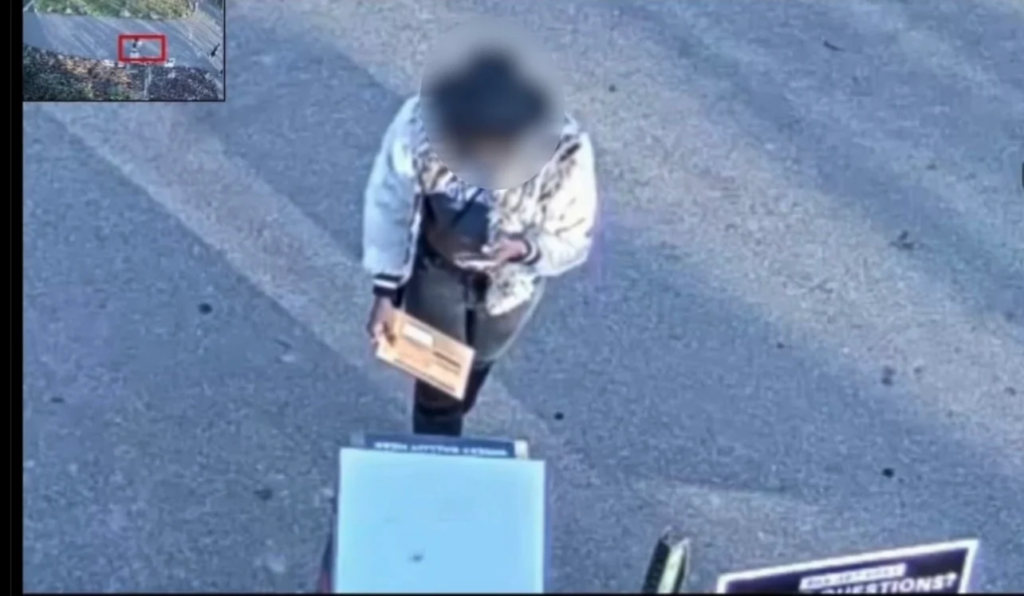
Michigan Citizens for Election Integrity (MC4EI.com) reviewed thousands of hours of surveillance footage that The Gateway Pundit obtained from 19 Detroit drop boxes for the November 2020 election. The videos covered 24 hours a day across 37 days.
Many people were seen using their phones to photograph themselves with their ballots as they placed them in the drop boxes. Or they simply snapped a picture of the ballot as they dropped it in. Were they just proud Detroiters showing the world they had voted, or was it something more? Could it have been required to get paid for the ballot they deposited?
It was clear that many tried to be stealthy about taking their pictures so the surveillance cameras would not see them. Phones were sometimes held close to the body or awkwardly in the palm. Some people had an accomplice walk to the drop box with them and take the photo. Some had someone in their vehicle photograph them. Others recorded themselves dropping ballots at the drop boxes and appeared to be on FaceTime with someone who seemed to be walking them through the process. People were seen scanning QR codes handed to them on slips of paper with their phones after depositing their ballots. There were also many photographers who clearly appeared to be professionals paid to photograph people depositing ballots and/or the drop boxes.
Many noticed abundant Facebook posts nationwide before the Nov 2020 election urging people to photograph themselves with their ballots to show they were voting and to encourage others to do the same. Was this truly a “promote the vote” effort, or a coordinated attempt to provide cover for real ballot traffickers? Everyone is taking pictures, so nothing to see here!
The Detroit News reported on Nov 2, 2020, that “for the first time in a presidential election in Michigan, voters can show the physical proof of their participation in the election by posting a “ballot selfie”, which had previously been banned. A 2019 court settlement allowed voters to photograph their own ballots, but only while inside the voting booth.
That settlement capped a three-year lawsuit filed by a citizen, Joel Crookston, against the state. In fact, it all began as a college prank. Crookston posted a photo of his ballot on Facebook in 2012 to show friends he had cast a write-in vote for a former college classmate running for Michigan State University trustee. They had always joked that his classmate would become “some big politician some day.” Crookston argued he had a constitutional right to take “ballot selfies” and challenged the state’s long-standing ban on photography at voting stations and polling places. Crookston admitted the whole lawsuit was “kind of a silly thing, for sure,” but said it was justified because he felt the First Amendment was being encroached upon by government. Really??!! It seems there are far more important First Amendment issues to address, such as stifling and censoring the free speech rights of conservatives.
So the Secretary of State had to get involved. Ruth Johnson (R) was SOS in 2016 and Bill Schuette (R) was Attorney General. Schuette, defending Johnson, said Michigan law and policy was “justified by the state’s long-standing interest in protecting the secrecy of the ballot and protecting those who seek to exercise their right to vote from distraction, harassment, or intimidation.” Yet the settlement was reached under Democrat Jocelyn Benson’s watch.
Prohibitions still exist on voters taking selfies in the voting booth or anywhere in the area where people are voting, and on taking any other type of photograph there. Ballot selfies were promoted to encourage others to vote and to proudly announce that a person had voted. Perhaps pride in voting fits young, first-time voters, but older people who had likely voted for years? Taking pictures??
If that is so, why do the surveillance videos show people often taking pictures in a secretive or sly manner? Why not tell the world you voted with a big smile and in full view of security cameras? Why were so many selfies focused on proving the ballot was going into the drop box? Possibly people were unaware of the court settlement allowing them to photograph their ballots. But phone photos were not seen in large numbers until the final days before the election. If this were just “look Ma, I’m voting!” and picture-taking done in ignorance of the new law, why wouldn’t all this photographing appear all the way back to early October?
Early voting spanned 37 days. Phone photography was seen for roughly 300 ballots. There were occasional spikes in phone photos before election day, but the highest numbers clearly clustered around Nov 2 and 3.
True the Vote obtained information from the whistleblower, “John Doe,” who was noted above, in Georgia regarding a network of NGOs that worked together to facilitate a ballot trafficking scheme. “John Doe” described a payment validation process which involved taking cell phone pictures of the drop box where ballots were deposited in order to be compensated, typically at a rate of $10 per ballot. He admitted to making $45,000 for stuffing ballot boxes. A VoterGA investigator released a video showing a man taking a phone picture of multiple ballots. He “fans out ballots, takes photos and places them in the drop box.”
For ordinary, honest Americans it is hard to see anything but a payment validation scheme in so many Detroiters photographing themselves and their ballots at drop boxes during the November 2020 election, no matter how the leftist legacy media spins it. It is ironic that photo IDs seem needed to illegally vote multiple times, while photo ID requirements for legal voting meet a mountain of Democratic opposition even though surveys and polls repeatedly show most Americans, including rank-and-file Democrats, support photo IDs in elections.
Michigan Citizens for Election Integrity exists to investigate, expose and share what we find. Our conclusion? The November 2020 General Election was the “least secure election in history.”
What do YOU see when you watch these videos?

